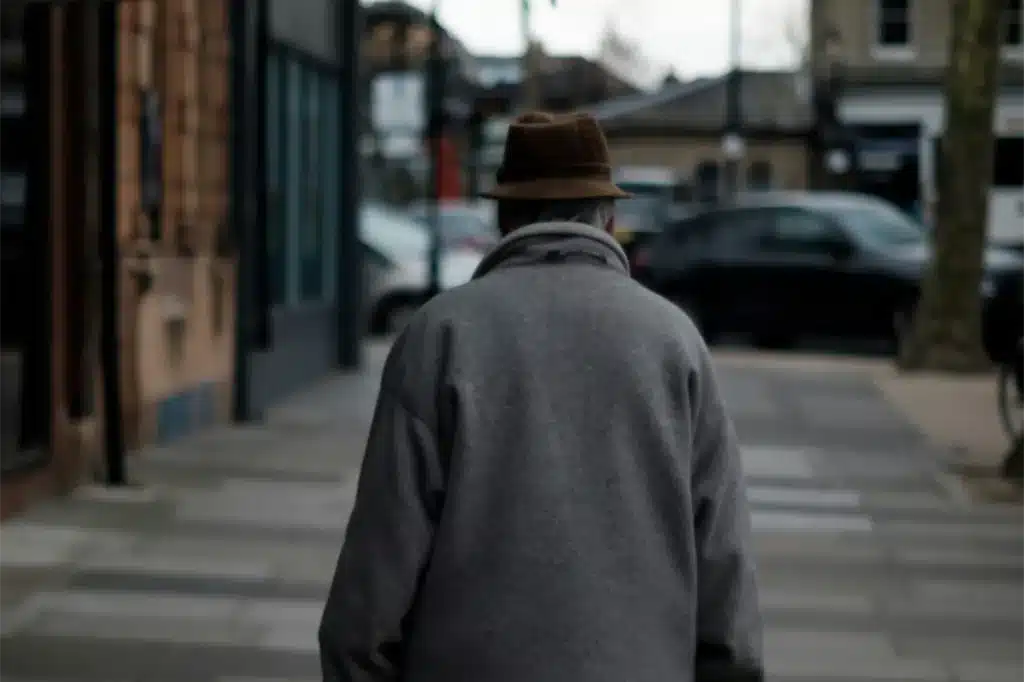
When Manuel arrived at a Boston hospital in 2023, it was because of severe back pain. Tests revealed prostate cancer that had metastasized to his spine. By then, he had been living on the margins for years: first in the shelter system, then in permanent supportive housing. Neighbors noticed when he stopped coming out of his room, and by the time anyone checked, he could barely get out of bed.
With no family identified, no health care proxy, and no one to speak for him, the court appointed Public Guardian Services to step in. Patricia Burke became his Care Manager.
Patricia recalls a man in his early seventies whose smile lit up a room. He laughed off questions about marriage — “No, too much trouble” — and brushed away concerns with a simple, “I’m good.” Communication was often a puzzle. He spoke Cape Verdean Creole and some English, often keeping his answers short. Patricia relied on telephonic interpreting when needed to help break through the language barrier. Occasionally, he mentioned a sister named Rosa, sometimes with a place name, but never with enough clarity to track down.
Still, Patricia did what she could: attending his oncology appointments, managing his care, and pushing past his reluctance to admit that he was in pain. At first, his prognosis looked manageable. But within months, his cancer advanced, his weight dropped, and hospice became the only option.
That’s when the story took a turn no one expected.
Manuel’s first roommate at the nursing facility had worked with his father many years ago. This man’s wife knew one of Manuel’s sisters, but the two men has been moved into separate rooms a couple of years previously, and no one suspected the connection between wife and sister. One night, the former roommate saw Manuel being wheeled out on a gurney to an ambulance for medical treatment, and he thought Manuel had died. Later that night, he gave this news to his wife over the phone. She immediately called Manuel’s sister to offer condolences.
The sister, it turned out, was one of 13 surviving siblings who had lost track of Manuel years ago and given up their search for him. They soon learned, to their relief and joy, that Manuel was indeed alive. The word spread to dozens of siblings, cousins, nephews, nieces, and other extended family up and down the East Coast. The mysterious Rosa turned out not only to be real, but was able to fly from Florida within 24 hours to be reunited with Manuel at his hospital bedside. She had been looking for her brother for years.
Given how big the family turned out to be, it seemed likely that Manuel had let himself become lost to them at least partially by design. Rosa told Patricia she suspected that his wayward drift was driven by shame around drinking, homelessness, and not wanting to be a burden. Exactly how it happened would never be known. He had once worked along the docks, but not much was known about his life then. He had spent several years at the Pine Street Inn before before PGS became his guardian.
Sadly, the family reunion was short-lived. Manuel’s cancer did not remit, and he died just two weeks after being embraced by his family. But he didn’t die alone.
At his funeral, relatives filled the room: six siblings on his mother’s side, seven on his father’s, plus extended family and community members. There were flowers, music, photographs, and stories. A man once thought forgotten was laid to rest with dignity, his life honored, his family reconnected.
Manuel’s family expressed their deep gratitude to Patricia and PGS for taking such good care of him. For Patricia, it remains one of the most meaningful outcomes she’s seen:
“He didn’t always advocate for himself. He didn’t want to reconnect. He wanted to do it his way. But in the end, he wasn’t forgotten.”